
上一篇從作用域與閉包看到,函式可以讀取並保留外部狀態。當 TypeTrail 開始有多道題目時,還需要把每道題目的資料和操作整理在一起:題目文字各自不同,顯示題目的方式卻可以共用。
如果每次都重新建立相同結構,程式很快就會出現重複。class 是整理這類物件的一種方式,Angular 的元件與服務也會使用它。
不過,把資料和方法放進 class 之後,還有兩件事需要弄清楚:JavaScript 從哪裡找到方法,以及方法裡的 this 指向誰。這篇會從建立 Question 物件開始,再看方法變成回呼函式時,為什麼可能失去原本的 this。
Class 可以描述同一類物件建立時要保存哪些資料,以及能執行哪些操作。先定義 Question class,再透過 new 建立個別題目。由 class 建立的物件稱為實體(instance)。
class Question {
  constructor(prompt) {
    this.prompt = prompt;
  }

  showPrompt() {
    console.log(this.prompt);
  }
}

const firstQuestion = new Question("Prototype 是什麼?");
const secondQuestion = new Question("this 是在哪個時機決定的?");

firstQuestion.showPrompt(); // Prototype 是什麼?
secondQuestion.showPrompt(); // this 是在哪個時機決定的?
執行 new Question(...) 時,JavaScript 會先建立一個新物件,讓 this 指向它,再執行 constructor。這個範例的 constructor 收到題目文字後,透過 this.prompt = prompt 將文字存進實體。
firstQuestion 與 secondQuestion 是兩個不同的實體,各自保存自己的題目文字。
屬性與方法 / Property and method
屬性用來保存物件的資料,例如prompt;方法則是物件可以執行的函式,例如showPrompt()。
這裡先把 this.prompt 理解成「這次呼叫所使用物件的 prompt」。判斷 this 實際指向誰時,還要一起看函式的呼叫方式。
每個實體都有自己的 prompt,但一般 class 方法不會複製到每個實體裡。可以使用 Object.hasOwn 檢查屬性是否直接存在於物件本身:
console.log(Object.hasOwn(firstQuestion, "prompt"));
// true
console.log(Object.hasOwn(firstQuestion, "showPrompt"));
// false
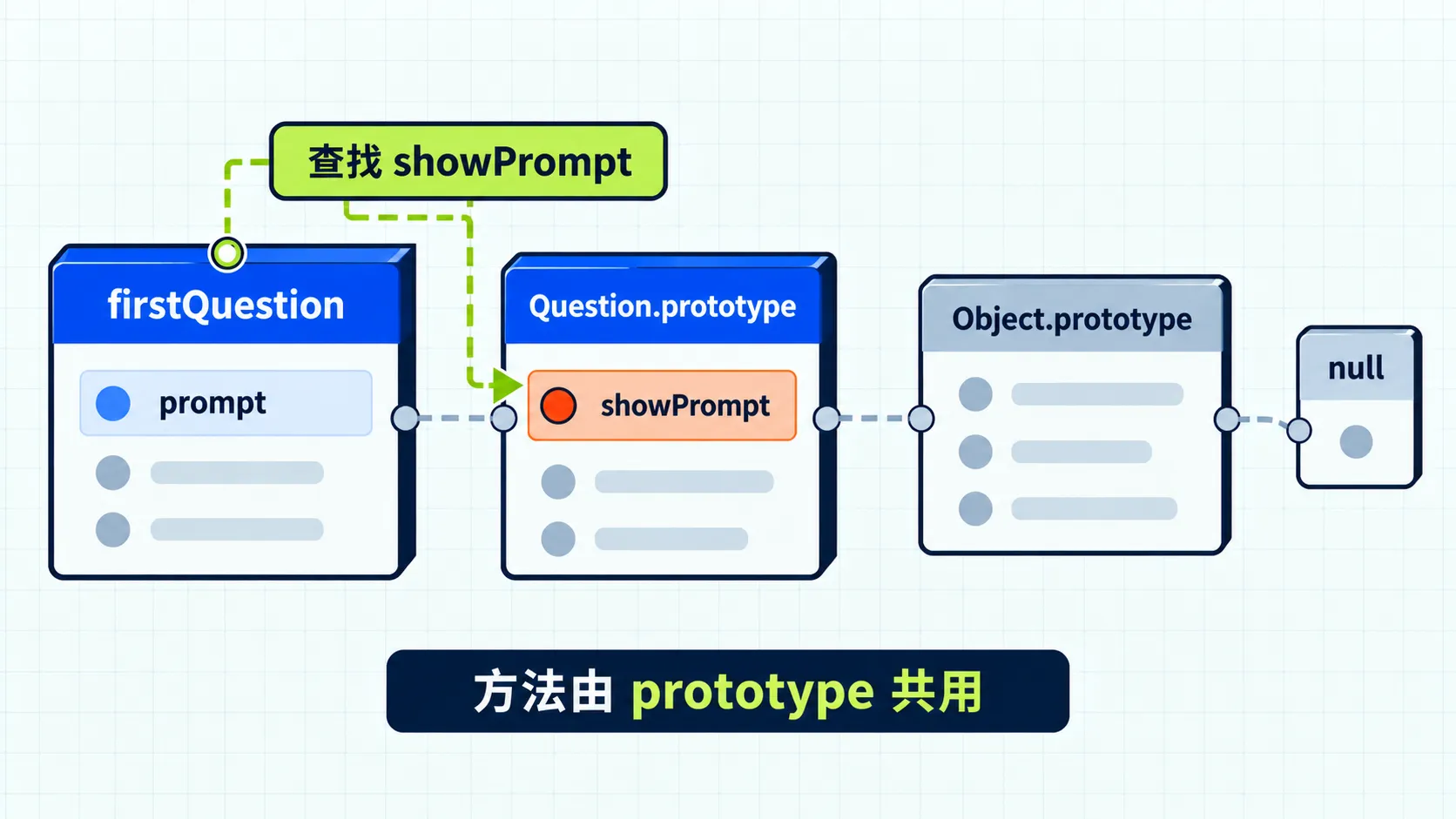
雖然 firstQuestion 本身沒有 showPrompt,卻仍然可以呼叫它,原因就在 prototype。寫在 class 裡的一般方法會放在 Question.prototype:
console.log(Object.getPrototypeOf(firstQuestion) === Question.prototype);
// true
console.log(firstQuestion.showPrompt === Question.prototype.showPrompt);
// true
原型 / Prototype
Prototype 是物件在自身找不到屬性時,會繼續查找的另一個物件,例如firstQuestion會接著查找Question.prototype。
讀取 firstQuestion.showPrompt 時,JavaScript 會依序查找 firstQuestion、Question.prototype 與 Object.prototype,直到找到 showPrompt 或抵達 null。這條路徑稱為原型鏈(prototype chain)。
因此,各個實體能保存自己的 prompt,並共用 Question.prototype 上的 showPrompt。Class 只是把建立實體與定義共用方法的語法集中起來。
修改
Object.prototype等內建原型會影響其他物件的屬性查找,除非有非常明確的理由,否則應避免這樣做。
this 由呼叫方式決定原型鏈只負責決定「去哪裡找到 showTitle」;找到函式之後,this 指向誰仍由呼叫方式決定。先看同一個函式被兩個物件使用時的結果:
const quiz = {
  title: "Day 4",
  showTitle() {
    console.log(this.title);
  },
};

const review = {
  title: "複習題",
  showTitle: quiz.showTitle,
};

quiz.showTitle();   // Day 4
review.showTitle(); // 複習題
兩個物件共用了同一個 showTitle 函式;實際呼叫時,點號左邊的物件會成為 this。因此,quiz.showTitle() 的 this 是 quiz,review.showTitle() 的 this 則是 review。
把方法交給其他函式時,原本點號左邊的物件可能消失。回到開頭的 firstQuestion:
function runAction(action) { action(); }

runAction(firstQuestion.showPrompt);
// TypeError:this 是 undefined
runAction 最後以 action() 呼叫收到的函式,前面沒有 firstQuestion.,因此沒有提供接收者,也就不會以 firstQuestion 作為 this。
Class 會自動使用嚴格模式;方法失去接收者時,
this是undefined,因此讀取this.prompt會發生 TypeError。
可以使用 bind 建立固定 this 的新函式:
const boundShowPrompt = firstQuestion.showPrompt.bind(firstQuestion);

runAction(boundShowPrompt); // Prototype 是什麼?
bind 不會立即執行原方法,而是回傳一個新函式。呼叫新函式時,this 會固定為指定的 firstQuestion。
this另一種做法,是把方法寫成 class 欄位中的箭頭函式(arrow function)。箭頭函式不會建立自己的 this,而是沿用定義位置的 this:
class ArrowQuestion {
  constructor(prompt) {
    this.prompt = prompt;
  }

  showPrompt = () => {
    console.log(this.prompt);
  };
}

const arrowQuestion = new ArrowQuestion("箭頭函式會保留 this 嗎?");
const arrowCallback = arrowQuestion.showPrompt;
arrowCallback(); // 箭頭函式會保留 this 嗎?
箭頭函式欄位會建立在每個實體上,並沿用建立時的 this。因此,即使取出後單獨呼叫,仍能讀取原實體的 prompt。
一般 class 方法由 prototype 共用;箭頭函式欄位則每個實體各有一份。方法經常需要作為回呼函式時,再考慮使用 bind 或箭頭函式欄位。
TypeTrail 每場測驗可以建立 QuizSession,讓實體保存分數並透過 prototype 共用方法。複習場次再建立另一個實體,兩者維持相同結構。
Angular 的元件(Component)與服務(Service)都以 TypeScript class 為基礎。元件保存畫面狀態與操作,服務則集中可重用的資料或規則。
export class ScoreComponent {
  score = 0;
  addPoint() { this.score += 1; }
}

export class ScoreService {
  passingScore = 3;
  isPassing(score: number) { return score >= this.passingScore; }
}
ScoreComponent 用欄位保存分數,ScoreService 集中及格分數與判斷規則,供不同元件使用。
this 由呼叫方式決定。方法變成回呼函式時,可以使用 bind 或箭頭函式欄位保留 this。方法能作為回呼函式傳遞之後,接下來就能進一步理解 Promise 與計時器如何安排非同步工作的執行順序。
本文同步分享於個人部落格:https://johnsonchen.dev/blog/typescript/prototype-class-and-this/



 iThome鐵人賽
 看影片追技術